• In today’s digital-first world, artificial intelligence is no longer confined to tech labs or sci-fi fantasies. It’s in your pocket, your bank account, and increasingly, your investment strategy. At the heart of this revolution is AI-as-a-Service (AIaaS)—a cloud-based model that delivers intelligent tools to users without the need for complex infrastructure or deep technical know-how. From real-time trading to long-term wealth planning, AIaaS is empowering individuals with smarter, faster, and more personalized financial solutions.

    What Is AI-as-a-Service?

    AI-as-a-Service is the delivery of artificial intelligence capabilities—like machine learning, natural language processing, and predictive analytics—via cloud platforms. Instead of building AI systems from scratch, users can tap into pre-built models and services on demand. This shift has made AI accessible to startups, enterprises, and everyday consumers alike, opening the door to a new era of financial empowerment.

    AI Trading Assistant: Precision in Every Trade

    One of the most exciting applications of AIaaS in finance is the AI trading assistant. These intelligent systems analyze massive volumes of market data in real time, spotting trends and anomalies that human traders might miss. Whether it’s identifying a breakout stock or managing risk exposure, AI trading assistants offer speed, accuracy, and emotion-free decision-making.

    Key advantages include:

    • Real-time analysis of global markets
    • Automated trade execution based on predictive models
    • Risk management through dynamic stop-loss and portfolio balancing

    For retail investors, this means access to tools once reserved for hedge funds and institutional traders. With AIaaS, anyone can trade smarter—not harder.

    AI Investment Advisor: Personalized Wealth Strategy

    While trading focuses on short-term gains, long-term financial health requires strategic planning. That’s where the AI Investment Advisor comes in. These digital advisors use machine learning to craft investment portfolios tailored to individual goals, risk profiles, and market conditions.

    What makes them powerful:

    • Goal-based investing for retirement, education, or major purchases
    • Continuous portfolio optimization based on market shifts
    • Tax-efficient strategies to maximize returns

    Unlike traditional advisors, AI Investment Advisors operate 24/7, constantly learning and adapting. They democratize wealth management, making sophisticated financial planning accessible to anyone with a smartphone and a dream.

    Personal Finance Assistant: Everyday Financial Clarity

    Managing your money isn’t just about investing—it’s about making smart choices every day. The Personal Finance Assistant is an AI-powered tool that helps users track spending, set budgets, and plan for short-term goals. It connects with your bank accounts, credit cards, and digital wallets to offer a real-time snapshot of your financial life.

    Core features include:

    • Expense categorization and trend analysis
    • Budget forecasting based on historical behavior
    • Smart alerts for bills, low balances, and unusual activity

    Over time, the Personal Finance Assistant learns your habits and preferences, offering increasingly personalized insights. It’s like having a financial coach in your pocket—nudging you toward better decisions and helping you stay on track.

    A Unified Financial Ecosystem

    The real magic happens when these tools—AI trading assistant, AI Investment Advisor, and Personal Finance Assistant—work together. Imagine a system where your spending habits inform your investment strategy, and your trading decisions adjust based on your long-term goals. AIaaS platforms make this possible by offering modular, interoperable services that can be customized to fit your financial life.

    This integration creates a seamless experience, where every financial decision is informed, optimized, and aligned with your personal objectives.

    Security and Ethics in AIaaS

    With great power comes great responsibility. AIaaS providers must prioritize data security, transparency, and ethical practices. Encryption, multi-factor authentication, and regulatory compliance are table stakes. But beyond that, users should look for platforms that offer explainable AI—where decisions are transparent and free from bias.

    Human oversight remains essential. While AI can guide and automate, the final decision should always rest with the user.

    Global Reach and Financial Inclusion

    AIaaS isn’t just for Wall Street or Silicon Valley. Its cloud-based nature makes it accessible to users around the world, including those in emerging markets. In places where financial literacy and access to banking are limited, tools like the Personal Finance Assistant can be life-changing.

    Examples of impact:

    • Micro-investing platforms powered by AI Investment Advisors
    • Region-specific AI trading assistants tailored to local markets
    • Multilingual finance assistants breaking down language barriers

    This global accessibility is driving financial inclusion, helping millions take control of their financial futures.

    What’s Next for AI-as-a-Service in Finance?

    The future of AIaaS in Finance is bright—and deeply interconnected with other emerging technologies. Think blockchain-powered investment platforms, voice-activated finance assistants, or augmented reality dashboards for portfolio management. As AI models become more sophisticated, they’ll not only react to market changes but anticipate them, offering proactive strategies based on global sentiment and economic indicators.

    Your AI trading assistant might soon be able to simulate geopolitical scenarios. Your AI Investment Advisor could adjust your portfolio before a recession hits. And your Personal Finance Assistant might help you plan a vacation without derailing your savings goals.

    Conclusion: Intelligence Meets Empowerment

    AI-as-a-Service is more than a tech trend—it’s a movement toward smarter, more inclusive financial decision-making. By putting powerful tools like the AI trading assistant, AI Investment Advisor, and Personal Finance Assistant into the hands of everyday users, AIaaS is leveling the playing field.

    No longer do you need a financial degree or a team of analysts to make informed choices. With AIaaS, your financial future is not just manageable—it’s masterable.


  • The digital asset economy is expanding at an unprecedented pace, demanding high-performance trading infrastructure that can support millions of users worldwide. Despite the emergence of decentralized models, centralized crypto exchange solutions remain the dominant force, delivering the speed, security, and professional experience both retail and institutional traders expect.

    A comprehensive Centralized Exchange Suite provides far more than basic order matching. It combines advanced trading engines, deep liquidity, institutional-grade compliance, and seamless banking integration. Key components such as P2P & OTC Platform, CEX mobile app, digital and crypto banking platform, and compliance and liquidity engine transform a simple exchange into a powerful, all-in-one financial ecosystem.

    Why Centralized Exchanges Remain in Demand?

    Even as decentralized finance gains attention, centralized exchanges continue to process the bulk of trading activity. The reason is clear: a centralized crypto exchange offers fast execution, custodial security, and intuitive onboarding that appeal to both new and professional traders. These platforms also integrate directly with fiat payment systems, making them more accessible for everyday users and institutional participants.

    Institutional investors value centralized infrastructure for its reliability, customer support, and regulatory readiness. By maintaining full control over custody and liquidity, centralized operators deliver stability that decentralized solutions cannot always guarantee.

    Core Pillars of a Centralized Exchange Suite

    A well-designed Centralized Exchange Suite is not a single product but an entire digital asset ecosystem. Below are its foundational pillars:

    1. Centralized Crypto Exchange Platform

    The centralized crypto exchange forms the core of the entire suite. It handles user onboarding, account management, and KYC verification, while powering key trading functions. A robust centralized platform typically features:

    • High-throughput matching engines capable of millisecond execution.
    • Custodial wallet infrastructure with cold storage and multi-signature protection.
    • Support for spot, margin, and derivatives markets.
    • Flexible architecture to scale during traffic surges.

    This centralized control ensures consistent performance and a seamless user experience.

    2. P2P & OTC Platform for Versatile Trading Options

    An integrated P2P & OTC Platform adds flexibility to the trading environment:

    • P2P marketplaces let users buy and sell assets directly, often avoiding high spreads and providing localized payment options.
    • OTC desks serve institutions and high-net-worth individuals who need to execute large block trades without affecting market prices.

    Including these services inside the exchange ecosystem attracts both retail and institutional participants, boosting liquidity and user confidence.

    3. CEX Mobile App for Trading on the Go

    Mobile accessibility drives global adoption. A native CEX mobile app allows traders to monitor markets and execute trades anytime:

    • User-friendly design with advanced charting and real-time data.
    • Biometric login, two-factor authentication, and secure withdrawal features.
    • Fast fiat deposits and withdrawals through integrated gateways.
    • Market alerts and portfolio tracking in one intuitive interface.

    Mobile-first development ensures engagement from a generation of users who primarily trade via smartphones.

    4. Digital and Crypto Banking Platform Integration

    A next-generation Centralized Exchange Suite integrates with a digital and crypto banking platform to provide banking-grade services alongside trading:

    • Multi-currency fiat accounts and seamless on-ramps/off-ramps.
    • Crypto debit cards for everyday spending.
    • Merchant payment solutions accepting digital currencies.
    • Yield-generating services such as staking and interest accounts.

    This convergence of banking and crypto services transforms an exchange into a full-service financial hub rather than just a trading venue.

    5. Compliance and Liquidity Engine

    Regulation and liquidity are central to long-term exchange success. A sophisticated compliance and liquidity engine delivers:

    • Automated KYC/AML processes with real-time transaction screening.
    • Fraud detection and risk scoring for enhanced platform security.
    • Deep liquidity pools and stable order books to support high-volume trading.
    • Transparent reporting tools to meet global regulatory obligations.

    These features attract institutional users and build trust with regulators and banking partners.

    Strategic Advantages of a Complete Centralized Exchange Suite

    Building an exchange with integrated functionality offers major benefits:

    1. Rapid Deployment – Turnkey suites accelerate launch timelines from years to weeks.
    2. Enhanced Security – Custodial frameworks and compliance tools safeguard assets.
    3. Modular Scalability – Architecture supports seamless expansion as demand grows.
    4. Diverse Revenue Streams – Income comes from trading, P2P services, OTC commissions, staking, and banking solutions.
    5. Global Expansion – Multi-language, multi-currency features enable rapid international growth.

    Real-World Applications of Centralized Exchange Suites

    These suites are adopted by a wide variety of organizations:

    • Crypto startups seeking to establish secure and scalable trading platforms.
    • Traditional financial firms entering the digital asset market without building technology from scratch.
    • Payment providers integrating crypto settlement solutions.
    • Brokerage firms adding regulated crypto services to their product line.

    Even governments and large enterprises use such infrastructure to launch regulated platforms tailored to national frameworks.

    The Next Stage of Centralized Exchange Technology

    Centralized solutions are evolving to stay competitive with decentralized alternatives. Emerging features include hybrid trading models that integrate decentralized liquidity, AI-driven surveillance to prevent market manipulation, and institutional APIs that enable automated, high-volume trading.

    The CEX mobile app will remain essential as mobile usage outpaces desktop trading, while digital and crypto banking platform features position exchanges as comprehensive financial ecosystems. In addition, stricter regulatory landscapes will make a robust compliance and liquidity engine more critical than ever.

    Conclusion: Defining the Future of Digital Asset Exchanges

    A modern Centralized Exchange Suite is more than a trading engine; it is a full financial ecosystem designed to meet the expectations of global users and regulators. By integrating a secure centralized crypto exchange, flexible P2P & OTC Platform, intuitive CEX mobile app, comprehensive digital and crypto banking platform, and a high-grade compliance and liquidity engine, businesses can launch competitive platforms that attract both retail and institutional participants.

    This approach provides faster time to market, greater user trust, and long-term sustainability in an industry where performance and reliability are paramount.

    Ment Tech empowers businesses to deploy these next-generation exchange platforms with robust infrastructure, advanced compliance frameworks, and fully integrated trading ecosystems. With expertise in building centralized crypto exchange solutions enriched by P2P & OTC Platform, CEX mobile app, digital and crypto banking platform, and compliance and liquidity engine, Ment Tech helps companies establish secure, scalable, and regulation-ready platforms for global markets.

  • Blockchain technology is undergoing a profound shift from monolithic structures toward modular architectures that prioritize flexibility, scalability, and developer control. Traditional blockchain systems combine consensus, execution, and data availability into a single layer, which often limits throughput and customization. Modular blockchain solutions break these components apart, enabling each layer to evolve independently while maintaining robust security and interoperability.

    As the industry matures, ecosystems like Ethereum, Solana, Arbitrum Orbit, Avalanche subnets, and Polkadot & Parachains are leading this evolution by offering scalable and customizable frameworks for application-specific use cases. This transition marks a major milestone for decentralized finance (DeFi), gaming, supply chain, and other blockchain-powered industries.

    Understanding Modular Blockchains

    In monolithic blockchains, every node is responsible for all functions—transaction execution, data storage, and consensus verification. While this structure ensures decentralization and security, it creates bottlenecks when demand grows. Modular blockchains decouple these layers, allowing them to specialize and scale independently.

    • Consensus Layer: Secures the network and validates blocks.
    • Execution Layer: Runs smart contracts and processes transactions.
    • Data Availability Layer: Ensures block data is stored and retrievable.

    By separating these layers, developers can build tailored solutions—choosing different frameworks for different purposes, without being locked into a single design. This flexibility improves performance, reduces costs, and fosters innovation.

    Ethereum: Pioneering Rollup-Centric Modular Design

    Ethereum has been at the forefront of blockchain innovation since its launch. Originally a monolithic network, it is now transitioning to a rollup-centric roadmap. Layer-2 solutions like Optimistic and Zero-Knowledge (ZK) rollups handle execution off-chain while relying on Ethereum for settlement and security.

    This modular approach enhances throughput and reduces gas fees, addressing Ethereum’s scalability challenges. The upcoming Danksharding upgrade will further separate consensus from data availability, enabling rollups to store large amounts of transaction data without congesting the main chain.

    Developers can focus on building decentralized applications (dApps) while inheriting Ethereum’s robust security model. This makes Ethereum an essential foundation for scalable Web3 infrastructure.

    Solana: High-Performance Layer Optimized for Parallel Execution

    Solana takes a different approach to scalability. While not modular in its earliest form, Solana’s architecture is evolving to accommodate more flexibility without sacrificing its high-speed performance. Using Proof of History (PoH) combined with Proof of Stake (PoS), Solana achieves fast block times and high throughput, making it attractive for DeFi and NFT ecosystems.

    Recent developments are moving Solana toward hybrid models where execution layers or application-specific environments can be optimized independently. By supporting parallel execution and off-chain computation, Solana is positioning itself as a versatile platform for developers seeking both performance and customization.

    Arbitrum Orbit: Building Application-Specific Chains

    Arbitrum Orbit introduces a modular framework for developers to create customized Layer-3 chains on top of Arbitrum’s Layer-2 infrastructure. These Orbit chains inherit security from Arbitrum while allowing developers to tailor execution environments to specific needs—whether for gaming, DeFi protocols, or enterprise applications.

    This flexibility includes:

    • Selecting custom gas tokens
    • Adjusting transaction parameters
    • Integrating specialized governance mechanisms

    Because Arbitrum itself relies on Ethereum for security, Orbit chains benefit from a layered trust model. This demonstrates how modularity empowers developers to strike a balance between performance, cost efficiency, and security.

    Avalanche Subnets: Tailored Networks for Enterprises and dApps

    Avalanche subnets offer a unique modular solution where developers can create isolated, application-specific blockchains that interoperate within the broader Avalanche ecosystem. Each subnet can define its own virtual machine, governance rules, and tokenomics, while leveraging Avalanche’s consensus protocol for fast finality.

    Subnets are particularly appealing to enterprises and gaming projects that require regulatory compliance, customized permissioning, or high throughput without sacrificing decentralization. By isolating workloads, subnets avoid congestion from unrelated dApps, ensuring predictable performance.

    This modular design transforms Avalanche from a single blockchain into an ecosystem of customizable, interoperable networks optimized for diverse use cases.

    Polkadot & Parachains: Interoperability at the Core

    Polkadot & Parachains take modularity to another level by enabling heterogeneous blockchains to connect through a central Relay Chain. Instead of building isolated networks, developers launch parachains—specialized blockchains optimized for specific functions—that share security and communicate seamlessly.

    Key benefits of this model include:

    • Shared Security: Parachains leverage the Relay Chain’s validator set.
    • Cross-Chain Communication: Parachains can easily transfer assets and data.
    • Custom Runtime Environments: Using Substrate, developers can build parachains with unique features and governance.

    This approach provides a high degree of flexibility while solving interoperability challenges that have long plagued blockchain ecosystems. Polkadot’s design exemplifies how modularity creates a multi-chain future without sacrificing cohesion.

    Why Modular Blockchains Matter?

    The shift to modularity addresses critical pain points in blockchain technology:

    1. Scalability: By decoupling execution and consensus, networks can handle more transactions without compromising speed or security.
    2. Cost Efficiency: Developers can choose frameworks optimized for low fees, reducing barriers for users and dApps.
    3. Customizability: From governance models to tokenomics, modular systems empower projects to meet unique needs.
    4. Interoperability: Modular ecosystems like Polkadot make cross-chain communication seamless, unlocking new opportunities for DeFi and beyond.
    5. Security Inheritance: Layered trust models allow application-specific chains to benefit from the security of larger base layers like Ethereum.

    These advantages are pushing blockchain toward a future where single chains no longer dominate. Instead, we are entering a world of interconnected, application-focused networks.

    The Road Ahead for Modular Blockchains

    The next generation of blockchain infrastructure will be defined by ecosystems rather than isolated chains. Developers will be able to select execution layers, consensus protocols, and data availability services much like assembling components in cloud computing.

    • Ethereum will continue to serve as a foundational settlement layer for rollups and modular solutions.
    • Solana will refine its performance-oriented ecosystem to support hybrid modular designs.
    • Arbitrum Orbit will empower Layer-3 innovation with developer-friendly customization.
    • Avalanche subnets will dominate enterprise use cases requiring isolated, high-performance environments.
    • Polkadot & Parachains will set the benchmark for interoperability and shared security.

    As these frameworks mature, modularity will reduce friction for developers and users alike. Blockchain will become more accessible, affordable, and aligned with real-world applications—supporting everything from global finance to metaverse economies.

    Conclusion: A Composable Future for Blockchain

    Modular blockchain solutions represent a fundamental redesign of how decentralized systems are built and scaled. By separating consensus, execution, and data availability layers, ecosystems like Ethereum, Solana, Arbitrum Orbit, Avalanche subnets, and Polkadot & Parachains are driving a transition from rigid, one-size-fits-all architectures to highly customizable, interoperable frameworks.

    This shift will create a more robust, developer-friendly, and scalable Web3 landscape. Rather than relying on monolithic chains with inherent limitations, projects can now design tailored infrastructures while inheriting the security and trust of established networks. The modular blockchain era is not just an upgrade—it is the foundation of a decentralized, interconnected future.

  • Securing a listing on a centralized exchange can feel like a breakthrough—but without a robust plan, it’s often just the starting line. With the right combination of centralized crypto exchange development, crypto fundraising services, crypto marketing agency, centralized exchange listing services, and crypto community building services, your token’s listing can evolve into sustained growth, visibility, and market confidence. Here’s how to turn a moment of opportunity into a momentum-fueled journey.

    Why Listing Alone Isn’t Enough?

    Many projects treat a CEX listing as the finish line—only to see enthusiasm fizzle, trading volume dip, and visibility vanish soon after. A listing without deliberate crypto marketing agency support and community activation often fails to translate into meaningful traction. The real value lies in converting that listing into ongoing action and investment.

    The 3 Pillars of Post-Listing Success

    1. Visibility

    A basic listing won’t make your token stand out. You need strategically timed announcements, coordinated content, and exchange-level promotion. Expert crypto marketing agency involvement ensures your token appears where traders are already watching—at the right time, with the right message.

    2. Liquidity & Fundraising

    A token that lacks volume or predictable spreads struggles to gain trust. Crypto fundraising services and market makers help ensure smooth trading activity and encourage continued interest, especially in the critical post-listing period.

    3. Credibility & Community

    Being listed signals legitimacy. But credibility is cemented through active execution—consistent updates, delivered roadmaps, and strong engagement. Ongoing support through crypto community building services transforms initial visibility into deep-rooted trust and loyalty.

    Building a Growth Strategy That Lasts

    Assess Readiness

    Ensure your smart contract is audited, tokenomics are solid, and legal compliance is in place. A listing without these fundamentals risks poor performance or rejection.

    Select Exchanges Wisely

    Top-tier exchanges aren’t always the best fit. Mid-tier or regionally aligned platforms can offer early traction. Look for partners with experience in centralized exchange listing services to guide the decision.

    Secure Liquidity Early

    Work with market makers and schedule launches in line with peak trading periods to build momentum from day one.

    Synchronize Marketing & Listing

    Coordinate PR, social campaigns, AMAs, and influencer outreach to align with listing timelines. This ensures the buzz doesn’t end when the listing goes live.

    Think Long-Term

    Price listing opportunities, plan phased listings, and keep building distribution across diverse platforms to reach broader audiences and reinforce credibility.

    Choosing the Right Launch Partner

    A strong partner delivers more than listing facilitation—they provide strategy, execution, and ongoing impact:

    • Exchange Selection Guidance: Matching your token with exchanges that fit your reach and goals.
    • Compliance & Tech Readiness: Audit support, tokenomic alignment, and documentation.
    • Relationship & Access: Direct communication and faster approvals through established exchange ties.
    • Liquidity & Volume Planning: Market-making and spreading strategies from launch day onward.
    • Marketing Integration: Post-listing media, influencer outreach, and platform promotions.
    • Ongoing Support: Real-time monitoring, community engagement, and follow-up listing benchmarks.

    Common Pitfalls (And How to Sidestep Them)

    • Listing Too Early: Launch only when fundamentals and community support are solid.
    • Mismatched Exchange Choice: Choose platforms aligned with your audience and growth phase.
    • No Liquidity Plan: Without market-making, listings often stall early.
    • Failing to Market Post-Launch: Momentum fades fast without sustained promotion.
    • Treating Listing as the Endgame: True success lies in ongoing presence—not just visibility.

    Conclusion

    A successful token launch isn’t about ticking the box of getting listed—it’s about engineering a momentum-driven trajectory. Through disciplined preparation, strategic centralized crypto exchange development, thoughtful crypto fundraising services, targeted crypto marketing agency campaigns, expert centralized exchange listing services, and vibrant crypto community building services, your listing becomes a catalyst for lasting growth and credibility. Build with intention, launch with clarity, and grow with impact.

    Ment Tech offers end-to-end crypto exchange listing services, including exchange selection, liquidity management, and post-launch marketing to ensure token success.
    For inquiries, visit www.ment.tech or email contact@ment.tech.

  • The NFT industry has rapidly expanded into one of the most dynamic sectors of the digital economy, bridging art, gaming, collectibles, and the metaverse. With so many projects launching daily, competition is no longer just about who has the best artwork or the most innovative concept—it’s about who can stand out, build trust, and maintain momentum.

    This is where professional NFT Marketing agency services make the difference, delivering tailored strategies to capture attention, grow audiences, and create lasting value for projects. In the fast-moving Web3 landscape, the right marketing approach can mean the difference between an overlooked launch and a viral success story.

    The Unique Nature of NFT Marketing

    Promoting NFTs requires more than conventional advertising. The audience is digital-first, deeply engaged in online communities, and driven by a culture that values exclusivity, transparency, and utility. Successful NFT marketing blends storytelling, technical know-how, and cultural awareness to resonate with both crypto-native buyers and curious newcomers.

    Specialized agencies bring this expertise—knowing how to communicate utility, showcase uniqueness, and foster the sense of belonging that drives Web3 communities.

    A Full-Service Approach: NFT Marketing Agency Services

    A strong NFT marketing strategy works across multiple channels to create consistent visibility. With NFT Marketing agency services, projects benefit from a unified plan covering branding, content creation, influencer collaborations, community management, and performance tracking.

    Core components often include:

    • Precise audience targeting based on interests, blockchain behavior, and collection trends.
    • Campaign integration across social media, PR, and partnerships.
    • Continuous measurement to refine reach and impact.

    This coordinated approach ensures every promotional activity strengthens the project’s narrative and long-term potential.

    Spotlighting Games with NFT Game Promotion Campaigns

    The NFT gaming sector is booming, but attention is hard to earn. NFT Game Promotion campaigns are designed to attract both traditional gamers and blockchain enthusiasts by showcasing immersive gameplay and tokenized rewards.

    These campaigns frequently feature:

    • High-quality trailers and behind-the-scenes content.
    • Collaborations with respected gaming influencers.
    • Play-to-earn challenges that encourage early participation.

    Done right, they transform an NFT game from a hidden gem into a must-try experience for global audiences.

    Growing Visibility Through NFT Twitter and Threads Growth

    In the NFT space, Twitter remains the primary platform for announcements, discussions, and trendsetting. Effective NFT Twitter and threads growth strategies focus on making a project’s account both informative and engaging.

    Tactics may include:

    • Long-form Twitter threads that tell the project’s story and utility.
    • Using trending hashtags to reach relevant audiences.
    • Hosting live Spaces and interactive Q&A sessions.

    With a strong presence, projects can build credibility while fostering real-time engagement.

    Influencer Reach: NFT Influencer + KOL Marketing

    Influencers and Key Opinion Leaders can amplify an NFT project’s visibility overnight. Strategic NFT Influencer + KOL Marketing aligns a project with credible voices that have established trust within their communities.

    Such campaigns often involve:

    • Authentic reviews and personal endorsements.
    • Joint livestreams and AMA events to drive interaction.
    • Limited-time giveaways to boost excitement and participation.

    The key lies in selecting influencers whose audiences align with the project’s vision and values.

    Strengthening Communities with NFT Discord Growth and Server Setup

    For most NFT projects, Discord is the central hub where community members gather, interact, and stay updated. Proper NFT Discord growth and server setup ensures this hub is engaging, secure, and well-structured.

    Effective setups include:

    • Organized channels for announcements, discussions, and support.
    • Moderation systems and bots for safety and onboarding.
    • Events like contests, voice chats, and exclusive previews.

    When managed well, a Discord server can turn followers into dedicated supporters who actively contribute to the project’s culture.

    Launching with Impact: NFT Launchpad and Campaign Management

    The launch stage can define an NFT project’s long-term trajectory. NFT Launchpad and campaign management helps ensure a smooth, well-publicized release that maximizes visibility and sales potential.

    Services often cover:

    • Coordinating with top launchpads for broader exposure.
    • Managing whitelist and presale processes.
    • Executing countdown campaigns to generate anticipation.

    An organized, well-executed launch not only drives initial demand but also lays the groundwork for sustained market presence.

    Keeping Momentum Alive with NFT Community Retention Campaigns

    Post-launch, maintaining engagement is critical. NFT community retention campaigns focus on keeping holders connected, involved, and excited about the project’s ongoing development.

    Approaches include:

    • Exclusive perks and airdrops for loyal holders.
    • Regular progress updates and behind-the-scenes content.
    • Themed events and seasonal campaigns to reignite interest.

    Retention efforts help strengthen the community’s bond, boost secondary sales, and reinforce the project’s credibility over time.

    Aligning NFT Marketing with Broader Web3 Strategies

    The most successful NFT projects operate within a broader Web3 growth framework. Marketing can be integrated with partnerships, decentralized finance incentives, and metaverse activations to create an interconnected ecosystem.

    Examples include:

    • Collaborating with DeFi projects for staking opportunities.
    • Displaying NFTs in virtual galleries or metaverse marketplaces.
    • Involving holders in governance through DAO participation.

    Such integrations ensure the project offers ongoing value beyond the initial mint.

    Tracking Results and Adapting Campaigns

    With trends shifting rapidly, constant monitoring is essential. Metrics like social engagement, Discord participation, wallet growth, and secondary market activity help guide campaign adjustments.

    This data-driven approach allows marketing teams to refine strategies, capitalize on momentum, and stay ahead of competitors.

    Conclusion

    In the competitive NFT market, creative ideas need equally creative promotion to thrive. From NFT Marketing agency services to targeted NFT Game Promotion campaigns, strategic NFT Twitter and threads growth, impactful NFT Influencer + KOL Marketing, well-structured NFT Discord growth and server setup, seamless NFT Launchpad and campaign management, and sustained NFT community retention campaigns, the right approach transforms projects from launches into lasting brands.

    NFT success isn’t just about minting—it’s about building a presence, nurturing a loyal community, and continually offering value. With the right marketing partner, any project can stand out, scale, and succeed in the fast-paced world of Web3.

  • In 2025, blockchain is no longer an emerging technology—it’s infrastructure. Across industries, businesses are adopting blockchain services to build secure systems, reduce inefficiencies, and unlock new models of ownership and trust. This article explores the most in-demand service areas—from development to decentralized identity—shaping the next generation of digital solutions.

    Custom Blockchain Development for Scalable Innovation

    Blockchain development enables busi

    nesses to build everything from decentralized applications (dApps) to full-scale private networks. Developers craft smart contracts, tokens, consensus models, and custom architectures tailored to specific industry needs—bringing security, automation, and transparency to core business functions.

    Strategic Execution Starts with Blockchain Consulting

    Without clear direction, blockchain projects often fail before launch. Blockchain consulting helps enterprises validate ideas, choose the right platform, design tokenomics, and meet compliance standards. It’s the bridge between technical potential and business impact.

    DeFi Protocol Development Driving Financial Autonomy

    Decentralized finance continues to evolve, offering lending, trading, and asset management without intermediaries. Through DeFi protocol development, teams build secure, composable financial systems that are disrupting traditional banking—while opening global access to capital and liquidity.

    Blockchain for Identity and KYC: A Trust-Based Model

    Managing digital identity is a growing concern. Blockchain for identity and KYC introduces self-sovereign identity systems, where users control and share verified credentials across platforms—enhancing privacy, speeding up onboarding, and reducing compliance costs.

    DePIN Infrastructure Development: Decentralizing the Physical World

    DePIN infrastructure development supports decentralized physical networks where users contribute computing power, bandwidth, or storage in exchange for tokens. These systems, like decentralized wireless or energy grids, offer more resilient and community-governed alternatives to centralized infrastructure.

    Cardano Blockchain Development: Secure, Scalable, Sustainable

    Cardano blockchain development is gaining traction for enterprise and government-grade applications. Known for its academic rigor and energy efficiency, Cardano enables secure smart contracts and predictable fees—ideal for sectors requiring formal verification and long-term sustainability.

    Conclusion

    The blockchain revolution isn’t loud—it’s strategic. From finance to infrastructure, identity to governance, today’s leading organizations are quietly integrating blockchain where it matters most. Businesses that invest in the right development, consulting, and decentralized models now will lead the digital economy tomorrow.

    Explore personalized blockchain solutions with Ment Tech.
    For consulting or development support, visit http://www.ment.tech or reach us at contact@ment.tech.

  • Crypto projects today are built in a different arena—one that values decentralization, transparency, and community-first growth. As new tokens and protocols enter the market daily, the challenge is no longer just about launching a product, but about reaching the right audience and sustaining attention in a crowded space. Effective strategies like crypto marketing solutions, targeted blockchain advertisement, and strong crypto community building services are becoming critical for long-term success. Whether you’re launching a new token or promoting a tokenized real-world asset, your marketing approach will often determine how far your project goes.

    Why Traditional Marketing Doesn’t Work for Crypto?

    The crypto space is decentralized, borderless, and community-driven. Unlike traditional products, crypto tokens, DeFi platforms, and blockchain startups often operate without centralized authorities, bank support, or mainstream advertising channels.

    This presents two primary challenges:

    1. Advertising Restrictions: Google, Facebook, and other platforms have long imposed strict rules on crypto-related ads. Even now, Web2 platforms often reject or shadow-ban crypto campaigns.
    2. Audience Skepticism: Crypto users are notoriously skeptical. Having seen countless rug pulls and scams, they don’t respond to flashy ads—they respond to transparency, utility, and community validation.

    This is where specialized crypto marketing solutions come into play—offering end-to-end services that are compliant, targeted, and built for the ecosystem’s unique nuances.

    What Are Crypto Marketing Solutions?

    Crypto marketing solutions are specialized strategies and services designed exclusively for blockchain-based businesses, exchanges, token projects, and DeFi platforms. These solutions often include:

    • Content marketing and whitepaper writing
    • Influencer and KOL (Key Opinion Leader) partnerships
    • AMA (Ask Me Anything) sessions on Telegram, Discord, or X
    • PR and press releases across top-tier crypto publications
    • Organic growth campaigns using airdrops, bounties, and whitelisting
    • Community governance management
    • Multilingual SEO and localization

    What differentiates these services is the focus on authenticity and community trust rather than one-size-fits-all outreach.

    For example, a token project looking to attract liquidity providers doesn’t need Facebook ads—they need engagement on DeFi-specific forums, token trackers, and Telegram groups. Tailored crypto marketing solutions help achieve just that.

    The Power of Blockchain Advertisement

    With traditional platforms being restrictive, blockchain advertisement has emerged as an alternative medium for growth and brand visibility in the crypto world.

    Rather than relying on Google Ads or Meta platforms, blockchain advertisement leverages:

    • Crypto ad networks like Coinzilla, AdEx, or Bitmedia
    • Native banners on top blockchain sites like CoinGecko or CoinMarketCap
    • Sponsored content in trusted outlets like Decrypt, CoinTelegraph, and The Block
    • Programmatic ad solutions that target wallet addresses and DApp usage

    The beauty of blockchain advertisement lies in its precision. You’re targeting actual crypto users—wallet holders, NFT collectors, DAO voters—rather than random demographics. It’s smart marketing, built for decentralized audiences.

    Moreover, some ad networks now offer on-chain analytics, letting you track conversions by wallet interactions instead of clicks—perfect for gauging ROI in a crypto-native environment.

    RWA Token Marketing: Bridging Real Assets and Digital Demand

    One of the most exciting frontiers in Web3 right now is the tokenization of real-world assets (RWAs). From real estate and gold to intellectual property and private equity—everything is being fractionalized and brought on-chain.

    However, these projects face a dual challenge:

    1. Appealing to traditional investors who may not be familiar with crypto
    2. Winning trust from crypto-native users looking for secure, yield-generating assets

    RWA token marketing fills this gap by designing campaigns that bridge these two audiences.

    Effective RWA token marketing includes:

    • Educational content on how tokenized assets work
    • Legal and compliance transparency in marketing messaging
    • Partnerships with regulated custodians and asset managers
    • Showcasing use cases (e.g., fractional property ownership, tokenized invoices)
    • Promoting liquidity solutions like DEX listings and DeFi integrations

    Since the RWA sector deals with regulated environments, marketing needs to be particularly sensitive to legal disclosures and audience expectations. Trust is paramount—and the right RWA token marketing strategy builds that trust, both on-chain and off.

    Token Launch Services: Building Momentum Before the First Trade

    Whether it’s an IDO, ICO, or a stealth launch, token projects need much more than a solid whitepaper and working smart contract to succeed. They need token launch services—purpose-built to generate awareness, build hype, and ensure tokenomics are aligned for long-term success.

    Some of the most effective token launch services include:

    • Pre-launch community building via Discord, Telegram, and X
    • Whitelist campaigns and early bird allocations
    • Strategic partnerships with influencers and DeFi projects
    • Listing support on platforms like DEXTools, CoinMarketCap, and CoinGecko
    • Security audits and showcasing audit results publicly
    • Token vesting communications and liquidity lock announcements

    Many launch failures happen not due to poor products but due to weak messaging and unclear value propositions. That’s why customized token launch services focus not just on marketing but on shaping the narrative—answering the core question every investor asks: “Why should I buy and hold this token?”

    The Role of Crypto Community Building Services

    In crypto, your most valuable asset isn’t your tech—it’s your community.

    Communities provide liquidity, spread word of mouth, stress-test protocols, and, in many cases, even govern the project’s direction. That’s why investing in crypto community building services is non-negotiable.

    These services go far beyond simply creating a Telegram group or a Discord server. The best crypto community building services include:

    • 24/7 moderation and multilingual support
    • Gamified participation using quizzes, tasks, and reward systems
    • Governance coordination for DAO-based projects
    • Community-led events, hackathons, and token bounties
    • Weekly updates, AMAs, and feedback loops
    • KOLs and ambassador programs

    Strong communities are what turn early-stage users into loyal holders and contributors. In the absence of a central authority, your community becomes your biggest promoter—and often, your best critic.

    Why Comprehensive Strategy Matters in 2025?

    It’s no longer enough to focus on just one area of marketing. Token success in 2025 demands a multi-channel, multi-phase approach. A project that uses blockchain advertisement but ignores its community is unlikely to thrive. Likewise, strong crypto marketing solutions won’t matter if the token launch services fail to convey utility.

    The most successful Web3 projects invest in an integrated growth strategy—one that combines:

    • Paid and organic blockchain advertisement
    • Narrative shaping and product-market fit
    • Roadmap transparency and tokenomics education
    • Legal alignment, especially for RWA token marketing
    • Pre- and post-launch momentum via token launch services
    • Daily engagement through top-tier crypto community building services

    In short, crypto marketing is not just about visibility—it’s about alignment. Alignment between product, market, team, message, and community.

    Conclusion

    Success in Web3 isn’t achieved by technology alone—it’s built on visibility, trust, and user-driven momentum. Projects that prioritize a structured marketing approach—from RWA token marketing and token launch services to ongoing crypto community building services—are better positioned to earn user confidence and secure long-term adoption. As the space continues to mature, strategic marketing is no longer optional—it’s foundational. For projects ready to scale with purpose and precision, the right crypto marketing strategy isn’t just a growth tool—it’s a competitive edge.

    Ment Tech is a leading technology partner specializing in end-to-end crypto marketing solutions, including blockchain advertisement, RWA token marketing, token launch services, and crypto community building services. With deep expertise in Web3, AI, and tokenization, Ment Tech empowers projects to scale visibility, trust, and user engagement across decentralized ecosystems.

    Visit herewww.ment.tech

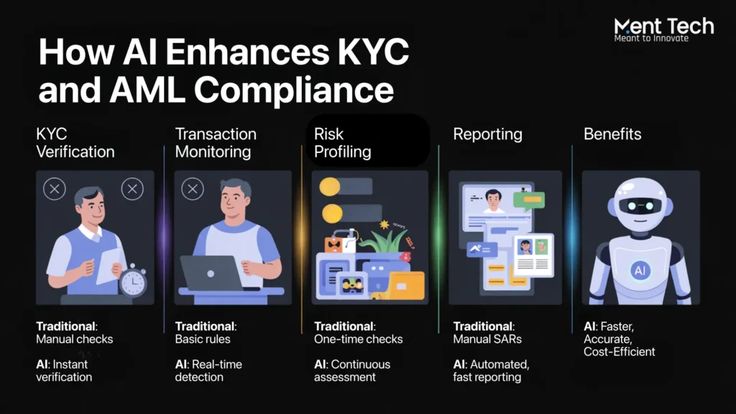
  • The global banking sector faces growing pressure to strengthen its defenses against financial crime. With money laundering accounting for up to 5% of global GDP, traditional compliance frameworks alone are no longer sufficient. Today, artificial intelligence is driving a much-needed shift in how financial institutions approach KYC (Know Your Customer) and AML (Anti-Money Laundering) compliance.

    AI-powered systems are helping organizations move beyond rule-based checks to scalable, adaptive, and intelligent compliance models. From onboarding to real-time fraud detection, AI is reshaping how compliance is executed—making it faster, more accurate, and better suited for today’s evolving threat landscape.

    The Role of AI in Modern Compliance Workflows

    AI plays a critical role in both KYC and AML processes. Traditional systems often rely on manual reviews and fixed rules that are inefficient and error-prone. In contrast, AI development services introduce machine learning algorithms that continuously improve over time, identifying suspicious behavior and verifying identities with greater precision.

    AI-powered KYC platforms automate customer verification using pattern recognition and data enrichment tools. For AML compliance, AI models scan vast transaction data in real time, flagging anomalies and helping teams generate timely Suspicious Activity Reports (SARs).

    This shift enables financial institutions to:

    • Reduce onboarding time
    • Increase accuracy in customer risk profiling
    • Detect fraud patterns in real time
    • Automate compliance reporting

    Why AI-as-a-Service Matters for Compliance

    Deploying AI in-house can be resource-intensive. AI-as-a-Service offerings are addressing this gap by making powerful AI tools accessible through scalable, on-demand infrastructure. These services allow banks and fintech firms to integrate enterprise AI solutions into their workflows without the overhead of building from scratch.

    Whether used for automated KYC checks or continuous AML monitoring, AI-as-a-Service solutions offer agility, cost-efficiency, and quick deployment. They also enable smaller institutions to meet the same compliance standards as larger players.

    Adaptive AI Solutions for Dynamic Threats

    Compliance environments are constantly evolving. Adaptive AI solutions help financial institutions stay current with regulatory changes and emerging fraud tactics. These systems self-adjust to new patterns, ensuring that compliance mechanisms remain effective without requiring constant reprogramming.

    For example, when new forms of identity fraud emerge or transaction behaviors shift, adaptive AI models can quickly learn and respond. This not only improves security but also reduces false positives that could otherwise burden compliance teams.

    Key Benefits of Using AI for KYC and AML Compliance

    1. Higher Accuracy: AI models reduce human error and uncover subtle risk signals missed by traditional tools.
    2. Real-Time Monitoring: Continuous data analysis helps detect threats as they occur.
    3. Operational Efficiency: AI streamlines verification, reporting, and data processing.
    4. Scalability: AI systems can manage large customer volumes and expanding regulatory demands.
    5. Regulatory Alignment: Machine learning models can be tailored to meet jurisdiction-specific KYC and AML requirements.

    Challenges in AI Implementation

    Despite its potential, integrating AI for compliance is not without challenges:

    • Data Quality: Inconsistent or incomplete data can affect model accuracy.
    • Integration: Legacy systems may not be compatible with modern AI solutions.
    • Explainability: Regulators often require clear insights into how AI models make decisions.
    • Cost: Initial setup costs can be high without a well-defined ROI strategy.

    These challenges can be mitigated by partnering with experienced providers of AI development services who understand regulatory requirements and banking infrastructure.

    Conclusion: Strengthening Compliance Through Intelligent Automation

    As financial crime continues to evolve, the future of compliance hinges on adopting technologies that can adapt, learn, and respond in real time. Artificial intelligence is no longer a secondary tool—it’s becoming the foundation for more resilient and responsive compliance infrastructures.

    AI-as-a-Service models are making it easier for institutions to scale compliance without massive infrastructure investments. Enterprise AI solutions are streamlining onboarding, monitoring, and reporting—helping banks meet regulatory standards with greater speed and accuracy. Meanwhile, adaptive AI solutions are ensuring that these systems keep pace with changing threats and evolving global regulations.

    By integrating AI development services into their compliance workflows, financial institutions can transform KYC and AML processes from reactive to proactive. It’s not just about staying compliant—it’s about staying compliant—it’s about staying ahead.

  • AI-as-a-Service, or AIaaS, allows organizations to adopt artificial intelligence through cloud-based platforms—no dedicated AI teams required. Companies can access pre-built models and APIs for machine learning, NLP, computer vision, and agent workflows on a subscription basis. As businesses embrace digital transformation, the AIaaS market is accelerating, expected to grow at 35% CAGR through 2030.

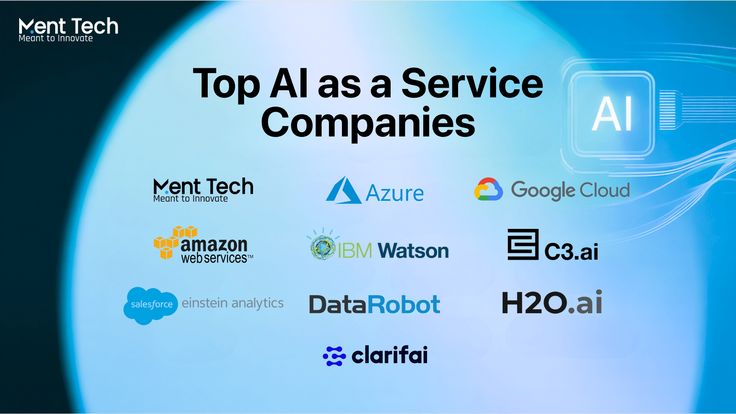
    Here are the industry-leading providers shaping AI adoption today:

    1. Microsoft Azure AI

    A central ecosystem for enterprises, Microsoft Azure AI includes Azure Machine Learning, Azure Cognitive Services, and Azure Bot Services. It supports custom and prebuilt AI models for speech, vision, language, and decision-making—deeply integrated with Microsoft productivity tools.

    2. Google Cloud AI / Vertex AI

    Google offers a comprehensive AI toolkit—from AutoML and Vertex AI to Vision AI and Natural Language APIs. Whether you’re a startup or an enterprise, Google provides scalable, ready-to-use AI models and infrastructure, backed by cutting-edge research.

    3. Amazon Web Services (AWS) AI

    AWS AI includes SageMaker for full ML lifecycle support and pre-trained tools like Rekognition, Polly, and Lex. Its massively scalable infrastructure powers use cases ranging from computer vision to predictive analytics, all with enterprise-grade reliability.

    4. IBM Watson

    IBM Watson excels in document analysis, NLP, virtual assistants, and enterprise-grade model governance. With Watson Studio and Watson Assistant, businesses gain the ability to build, deploy, and manage AI solutions securely at scale.

    5. Salesforce Einstein

    Embedded within Salesforce’s CRM platform, Einstein delivers AI-powered lead scoring, customer insights, and automation tools tailored for sales, marketing, and service workflows, making it an accessible AI choice for CRM-focused organizations.

    6. Oracle AI

    Oracle’s AI services integrate seamlessly with its cloud applications. With tools like Oracle Digital Assistant and predictive analytics, it facilitates enterprise automation and real-time insights within business functions such as HR, finance, and supply chain.

    7. SAP BTP AI (Joule)

    SAP within its Business Technology Platform delivers AI across enterprise apps. Joule, SAP’s AI copilot, streamlines workflows in finance, procurement, HR, and supply chain—offering deep integration for SAP’s global enterprise customers.

    8. DataRobot

    DataRobot democratizes AI with AutoML, MLOps pipelines, and governance tools. It enables users to build, deploy, and monitor models with minimal coding—ideal for analysts and companies democratizing AI across functions.

    9. H2O.ai

    With an open-source foundation, H2O.ai delivers explainable machine learning and automated model building. Its Driverless AI platform specializes in structured data use cases like risk modeling and forecasting.

    10. C3.ai

    C3.ai provides industry-specific AI applications across sectors like manufacturing, energy, and utilities. Its platform supports predictive maintenance, fraud detection, and supply-chain forecasting—optimized for large enterprise deployments.

    Why These AIaaS Platforms Matter

    These providers empower businesses to integrate AI quickly and affordably. They offer scalable infrastructure, pre-built models, and governance frameworks without requiring in-house AI expertise. Whether for automation, customer engagement, predictive analytics, or intelligent workflows, these platforms supply essential building blocks for innovation.

    Conclusion

    AI-as-a-Service is transforming enterprise IT in 2025. With platforms like Azure, AWS, Google Cloud, IBM Watson, and DataRobot, companies can unlock AI capabilities with ease, speed, and security. Whether you’re automating customer service, optimizing operations, or deploying generative AI agents, AIaaS platforms make implementation accessible and scalable. Choose the provider that fits your infrastructure, use cases, and governance needs—and accelerate your AI transformation journey.

  • Welcome to WordPress! This is your first post. Edit or delete it to take the first step in your blogging journey.

Design a site like this with WordPress.com
Get started