The global banking sector faces growing pressure to strengthen its defenses against financial crime. With money laundering accounting for up to 5% of global GDP, traditional compliance frameworks alone are no longer sufficient. Today, artificial intelligence is driving a much-needed shift in how financial institutions approach KYC (Know Your Customer) and AML (Anti-Money Laundering) compliance.
AI-powered systems are helping organizations move beyond rule-based checks to scalable, adaptive, and intelligent compliance models. From onboarding to real-time fraud detection, AI is reshaping how compliance is executed—making it faster, more accurate, and better suited for today’s evolving threat landscape.
The Role of AI in Modern Compliance Workflows
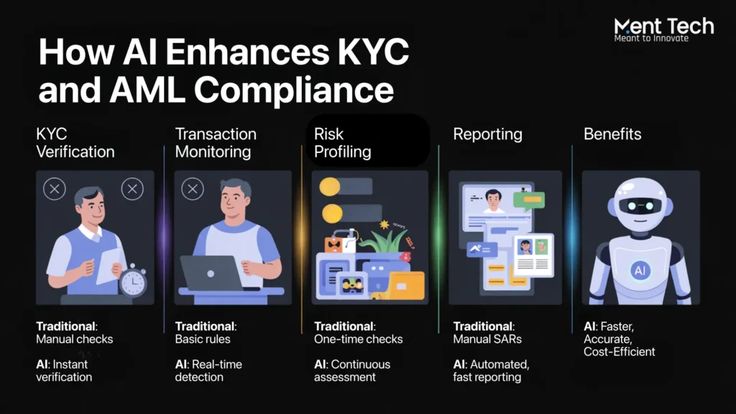
AI plays a critical role in both KYC and AML processes. Traditional systems often rely on manual reviews and fixed rules that are inefficient and error-prone. In contrast, AI development services introduce machine learning algorithms that continuously improve over time, identifying suspicious behavior and verifying identities with greater precision.
AI-powered KYC platforms automate customer verification using pattern recognition and data enrichment tools. For AML compliance, AI models scan vast transaction data in real time, flagging anomalies and helping teams generate timely Suspicious Activity Reports (SARs).
This shift enables financial institutions to:
- Reduce onboarding time
- Increase accuracy in customer risk profiling
- Detect fraud patterns in real time
- Automate compliance reporting
Why AI-as-a-Service Matters for Compliance
Deploying AI in-house can be resource-intensive. AI-as-a-Service offerings are addressing this gap by making powerful AI tools accessible through scalable, on-demand infrastructure. These services allow banks and fintech firms to integrate enterprise AI solutions into their workflows without the overhead of building from scratch.
Whether used for automated KYC checks or continuous AML monitoring, AI-as-a-Service solutions offer agility, cost-efficiency, and quick deployment. They also enable smaller institutions to meet the same compliance standards as larger players.
Adaptive AI Solutions for Dynamic Threats
Compliance environments are constantly evolving. Adaptive AI solutions help financial institutions stay current with regulatory changes and emerging fraud tactics. These systems self-adjust to new patterns, ensuring that compliance mechanisms remain effective without requiring constant reprogramming.
For example, when new forms of identity fraud emerge or transaction behaviors shift, adaptive AI models can quickly learn and respond. This not only improves security but also reduces false positives that could otherwise burden compliance teams.
Key Benefits of Using AI for KYC and AML Compliance
- Higher Accuracy: AI models reduce human error and uncover subtle risk signals missed by traditional tools.
- Real-Time Monitoring: Continuous data analysis helps detect threats as they occur.
- Operational Efficiency: AI streamlines verification, reporting, and data processing.
- Scalability: AI systems can manage large customer volumes and expanding regulatory demands.
- Regulatory Alignment: Machine learning models can be tailored to meet jurisdiction-specific KYC and AML requirements.
Challenges in AI Implementation
Despite its potential, integrating AI for compliance is not without challenges:
- Data Quality: Inconsistent or incomplete data can affect model accuracy.
- Integration: Legacy systems may not be compatible with modern AI solutions.
- Explainability: Regulators often require clear insights into how AI models make decisions.
- Cost: Initial setup costs can be high without a well-defined ROI strategy.
These challenges can be mitigated by partnering with experienced providers of AI development services who understand regulatory requirements and banking infrastructure.
Conclusion: Strengthening Compliance Through Intelligent Automation
As financial crime continues to evolve, the future of compliance hinges on adopting technologies that can adapt, learn, and respond in real time. Artificial intelligence is no longer a secondary tool—it’s becoming the foundation for more resilient and responsive compliance infrastructures.
AI-as-a-Service models are making it easier for institutions to scale compliance without massive infrastructure investments. Enterprise AI solutions are streamlining onboarding, monitoring, and reporting—helping banks meet regulatory standards with greater speed and accuracy. Meanwhile, adaptive AI solutions are ensuring that these systems keep pace with changing threats and evolving global regulations.
By integrating AI development services into their compliance workflows, financial institutions can transform KYC and AML processes from reactive to proactive. It’s not just about staying compliant—it’s about staying compliant—it’s about staying ahead.
 Site Title
Leave a comment